Faculty Spotlight: Ms. Edwina Agyeman
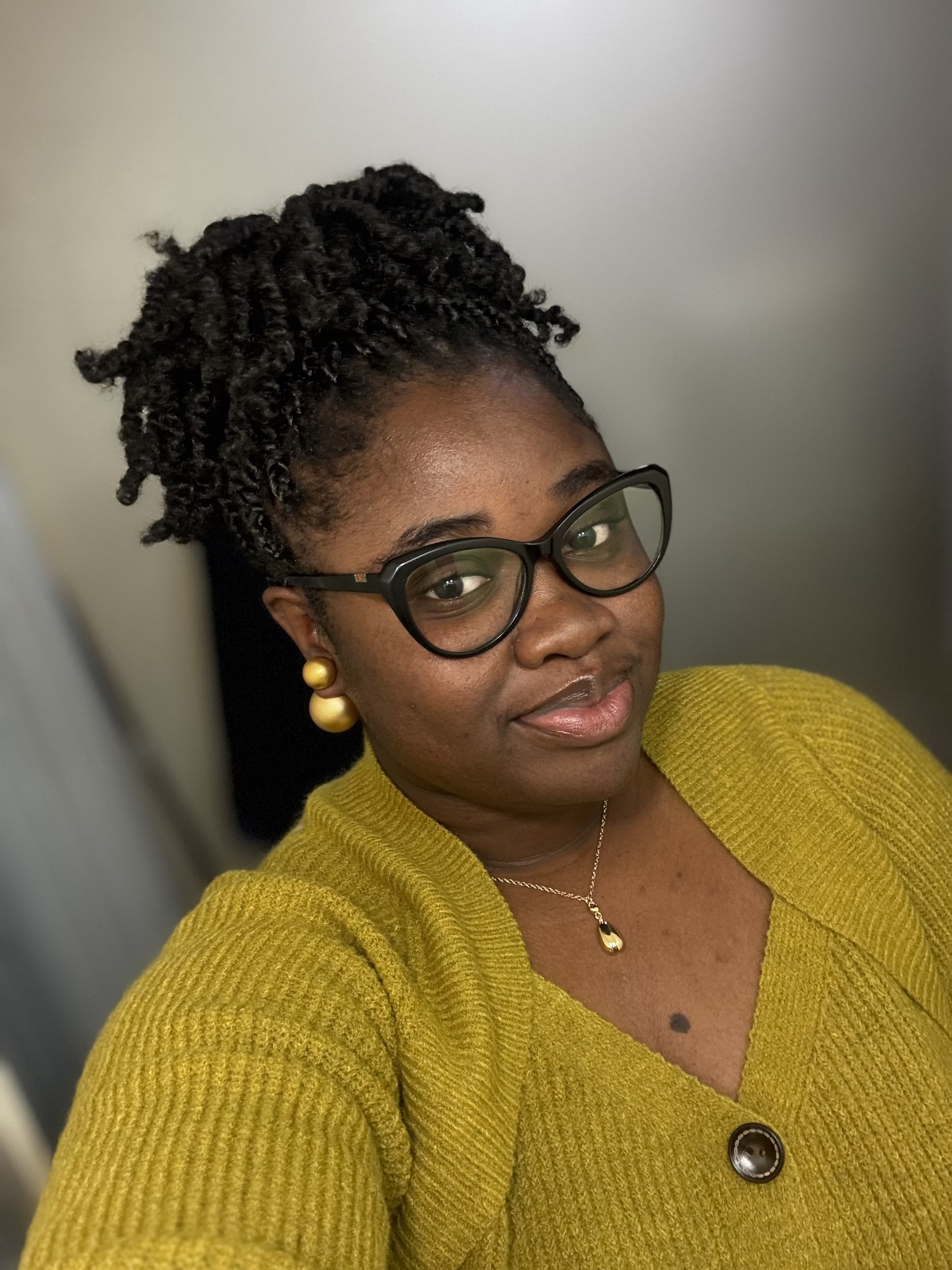
Editor's Note: This is the twenty-eighth in a series of spotlights on Mathematics and Statistics Faculty. Ms. Agyeman Joined us as a Lecturer in Fall 2026 after two years as a graduate assistant.
Do you have a hobby or collect something? How did you get into that?
For my hobbies, I have quite a variety of interests. I love designing and sketching dress ideas, and since I have a sewing machine, I really enjoy bringing those designs to life. I also like doing word search puzzles; they are a fun way for me to relax and keep my mind sharp. From time to time, I also like to draw and paint. And, like many people, I enjoy reading and watching Disney cartoons, movies, and TV shows.
Tell us about an adventure you had, or would like to have.
I would love to travel to different countries around the world and experience the unique sights and attractions each one has to offer, like seeing the Eiffel Tower in Paris, the Leaning Tower of Pisa in Italy, and exploring a few places here in the U.S., along with many other famous landmarks.
What was one of you biggest successes or failures?
One of my biggest successes is earning my master’s degree in Mathematical Science from SFA. It had always been a lifelong dream of mine to further my education, so achieving that felt incredibly rewarding. Another big milestone for me is my teaching role in the Mathematics and Statistics department. It means a lot because I get to learn more while working with such supportive and inspiring colleagues. Beyond the achievements themselves, these experiences have built my confidence, strengthened my resilience, and reminded me that with consistency and faith, I can keep growing and reaching new goals.
What kind of music, books, movies, sports, games, cars, etc. (pick one or more) do you like? Is there any particular reason?
When it comes to music, I love a bit of everything across different genres. I especially enjoy gospel music, and I have a soft spot for songs from the ’60s, ’70s, and ’80s because I used to listen to them with my dad when I was younger. He passed years ago, so those playlists always make me feel connected to him. Growing up, I also enjoyed ’90s blues and early 2000s R&B. For movies, I’m really into action thrillers. And I still love the Disney classics I grew up with; they bring me comfort, a sense of nostalgia, and bring back memories of my childhood.
What do you study? How did you get into that? Are there any (real-world) applications of your area of study?
I studied Mathematical Science with a specialization in Statistics. I was inspired by my father, who was a math professor at my alma mater in Ghana. Following in his footsteps gave me the confidence to pursue this field. What I love most is how practical and impactful math and statistics are. They show up everywhere, from analyzing data to supporting business decisions, to improving healthcare outcomes, to understanding trends in everyday life. That real world usefulness is what keeps me passionate about the field.
What projects (academic or not) are you currently working on?
Currently, I am mainly focused on improving myself as a lecturer since this is my first year in the role. I am reading books, watching videos, and developing communication skills to better equip myself as a lecturer. In my spare time, I’m also sharpening my technical skills, especially in tools like Python and R that I worked with during my master’s, just to keep improving and growing in my field.
What did you do to put yourself through school, or what weird job have you held?
After my undergraduate studies, I enrolled in an apprenticeship in fashion designing. It was more than I bargained for. I had to sew a dress just three days after joining the program. There were a lot of early mornings, late nights and skipped meals but in end, the whole experience thought me various lessons I still apply today.
What was the best piece of advice you were ever given?
The best advice I got came during a really trying time in my life. I felt left behind when my plans to further my studies were delayed. What helped me through was this: don’t compare yourself to others. Everyone is running their own race, so focus on being better than you were yesterday.
The thing that really makes you cool and unique is something that I would never have thought to list here. What is it?
I’d say one thing that makes me cool and unique is that I’m a pretty quick learner, especially with anything hands on. Give me a simple tutorial and I can whip up a new tasty dish, try a new hairstyle, put together a fresh clothing look, or bake a new pastry. I love picking up new skills and making something creative out of them.
Mathematics and Statistics Programs at SFA
- Bachelor of Science in Mathematics
- with your choice of minor
- with secondary-level teacher certification through the JacksTeach program
- with concentration in actuarial studies
- with concentration in data science
- Minor in Mathematics
- Minor in Applied Statistics
- Master of Science in Mathematical Sciences with focus in
- Mathematics
- Statistics
Mission Statement
The purpose of the Department of Mathematics and Statistics is to attract and retain the best available scholars who actively pursue knowledge of mathematics, statistics, and/or mathematics education and who skillfully communicate their knowledge of the subject to their students, colleagues, and the community as a whole.
Specific roles of the Department are:
- To provide a sound curriculum for students who wish to pursue a career in mathematics or statistics in business and industry;
- To provide service courses for students who are majoring in some other department, but who need mathematics or statistics as a tool or to satisfy general degree requirements;
- To offer preparation to those who are planning to pursue a graduate degree;
- To prepare teachers for positions in colleges, universities, and public or private schools.